

According to the WSSC, copper piping is the most commonly used material for residential water supply lines. Copper piping first became available in the 1920's but it took another 19 to 25 years before it became widely used. The popularity of copper is due to its relatively long lifespan. Homeowners and multi-unit property managers can expect their copper pipes to last at least 20 years. However, it is not uncommon for copper pipes to last as long as 30 years before they start developing copper pipes leak, a.k.a. "pinhole leaks" and corrosion.

Many don't fully understand or appreciate the complexities of their plumbing and even fewer understand the full ramifications of a broken water pipe in a wall. Broken water pipes can be insidious little leaks that go undetected for months. They can also be full blown failures with immediate damage.

If you are currently undergoing or considering a significant Chicago building renovation, there are plumbing factors to keep in mind. Building renovations can lead to opportunities and challenges whether you are altering plumbing pipes or not. Here are six plumbing factors to keep in mind for your Chicago building renovation.
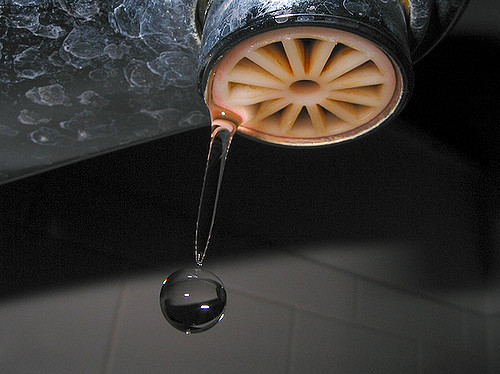
If you are experiencing low water pressure, it could be due to myriad of issues. In a high-rise, it can be caused by inadequate pumping pressure to lift the water upwards. Low water pressure can also be due to pipes that have become corroded so badly that flow is being restricted. But there is another issue that can cause low pressure that can also lead to an impending disaster in your home or building. Low water pressure can be the result of a hidden or unknown leak.

When I came to Nu Flow, I had much to learn about pipe relining. It didn't take long to realize I also needed to learn much more about plumbing pipes in general. You see, I hadn't given plumbing a great deal of thought. When I wanted a drink of water I turned on the faucet. When I took a shower the hot water was just a twist away. I took for granted just how valuable it is to be able to flush a toilet and have everything just carried away. I lacked an appreciation for how a plumbing network provides services we have come to expect. I never considered plumbing had a lifespan, and eventually, it would need to be replaced or otherwise upgraded. As I look back on the previous four years, I realize I am far from being alone in my appreciation.

Odds are your Chicago buildings plumbing was constructed using an almost uncountable number of pipe connectors, traps, and elbows. As the years have progressed, this number has likely increased, perhaps significantly. They may have increased due to remodeling or years and years of plumbing repairs. These connectors can be trouble spots for a variety of reasons. They can be a source of leaks because repairs weren't properly done or substandard materials were used. They also can fail due to what is called galvanic corrosion.

A waste drain vent pipe plays a simple, yet critical role in every building that has a wastewater drainage system. This includes your Chicago area building. A waste drain vent pipe allows gravity to do its job and carry human waste and wastewater away from your property through the city sewer system. They use basic physics to perform their job, equalizing the air pressure in your drain pipes.

Many never give a thought to how potable water rises to the top floors of a high rise building. That is, unless you are a building manager or live or work on one of the upper floors. In either of those cases you are likely well-aware of the issues involved, including the frustrations low water pressure can cause. How does water rise to these upper floors and what part does plumbing play? Is low pressure an indication of problems and what effect does all of this have on pipes? Let's take a look behind the walls.
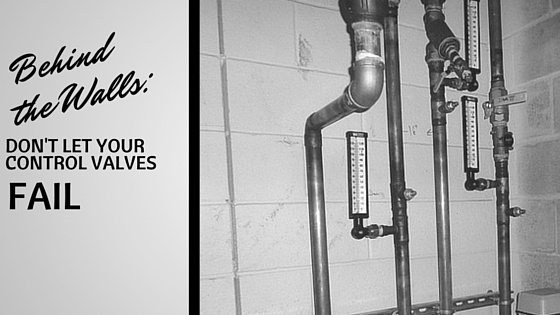
One of the most underrated and under appreciated part of a building's plumbing system is the series of control valves that help control the flow of water in the structure. Like much of your building's plumbing, control valves are mainly unseen, except when there is an emergency or repair necessary.
What are they?
A building's plumbing control valves are devices that are placed in various areas of a structures plumbing to control water flow. They can be adjusted to help maintain appropriate pressure and to completely shut off the flow of water.
Where are they?
Control valves are located throughout an entire building. A utility-owned control valve will allow the water company to shut of water to the entire building. Past the demarcation line, the building itself will have its own large control valve, giving the building's management and maintenance staff control of water flow to the structure in the event of a widespread issue. From there, smaller control valves will be located throughout the buildings pipe runs to segregate sections of a building. From there, individual units will each have a control valve. Finally, inside the units, individual control valves will allow water to be turned on and off to sinks, toilets, water heaters, ice makers, washing machines and other water-based appliances.
Why are they important?
Control valves are critical in stopping the flow of water to specific areas of a building. This is important when there is a pipe failure or when plumbing repairs are necessary. They also provide a way to stop the flow of water to a water appliance when it is being replaced. Properly placed and functioning control valves allow building managers to minimize damage to the building in case of failures. They also allow managers and maintenance personnel to minimize how many tenants are inconvenienced during a failure, repair or replacement.
How do I maintain them?
Maintaining control and shut off valves is simple, but it can be time-consuming due to the shear number of them that may be in a structure. Valves should be exercised to assure they are working properly, don't leak, and have not locked-up due to mineral deposits. Exercising control valves will also keep any minor deposits from building up by flushing them through the system. Exercising control values is as simple as turning them completely off, and then on again. When performing this task, you'll want to make sure flow has been completely stopped and restarted, and after exercising, the valve itself does not leak. Valves should be exercised several times a year.
When there is a failure in a control valve, it is usually already during an emergency or when a repair is necessary. A failure can lead to extensive damage and expensive repairs. To find out more about the value of control valve exercising, we invite you to read an article from our partner company, Althoff Industries.
At Nu Flow Midwest, we provide an innovative alternative to expensive and invasive pipe replacement. If you have been experiencing an increase in plumbing repairs in your Chicago area building, we invite you to learn more about all of your options.

Few building conditions will produce more phone calls quickly to a building managers office than a failure of the potable water pipe supply lines. Even low pressure in water lines will likely prompt urgent calls from affected tenants. Municipal water supplies have become so reliable, fingers get quickly pointed right at the building manager when an interruption occurs. Providing tenants with reliable, clean and safe potable water is one of a building's basic services and failures must be addressed quickly. Problems are not only an inconvenience, if an interruption occurs because of a large leak in a supply line, costly building damage can occur swiftly.
Let's take a look behind the wall at potable water pipes.